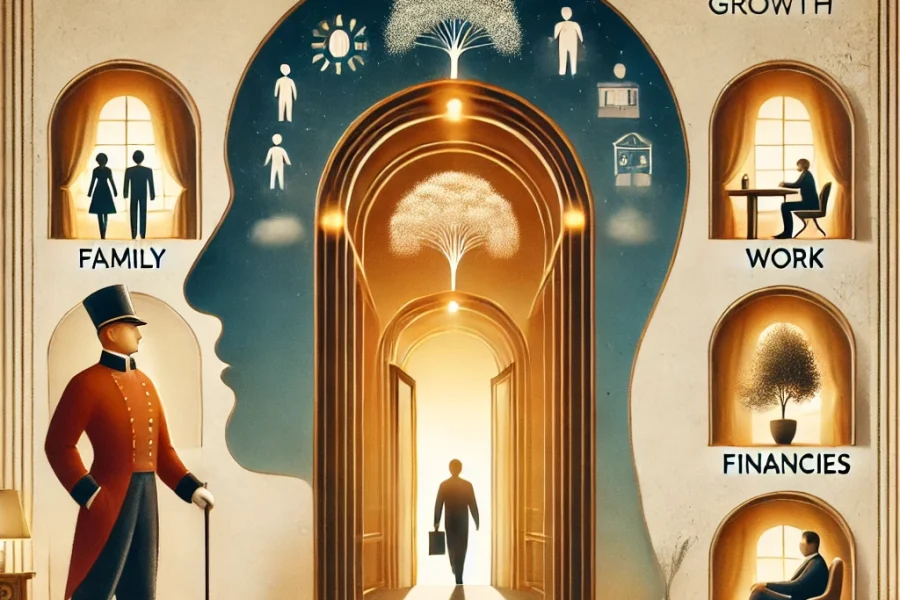
Dealmaker and Dealbreaker: a practical guide to choosing the right people in your life
In order to consider conflict as an opportunity for confrontation, it is important to learn to recognise conflict, in the different types in which it can decline, to examine the stages in which it develops and to find, through the most appropriate means, a solution that can satisfy all parties involved.
arrow_forwardRead full articleConflict in the workplace is a normal phenomenon: we all come from different backgrounds and, when we come into contact with other people, the divergence of positions due to different individual backgrounds comes to the surface, leading to conflict.
Conflict, however, does not have to be seen in a negative way, but on the contrary, it should be seen as an opportunity for confrontation and growth, both personal and professional. That is why it is important to learn to recognise conflict, in the different typologies in which it can decline, to examine the phases in which it develops and to find, through the most appropriate tools, a solution that can satisfy all parties involved.
There are different types of conflict, which can arise for example from miscommunication. This is the case with conflicts that arise due to unclear tasks and roles, which are triggered by a variety of reasons, such as lack of coordination in teamwork, delayed deliveries, incorrect assignment of tasks or a loose definition of responsibilities and tasks between team members. In this case, the conflict can be resolved simply by implementing training and information for employees and co-workers, so that everyone knows exactly what they have to do and in what manner.
Then there are the leadership conflicts, caused by the clash of different positions between people with a responsible role within the company. Everyone, in fact, has a different working style and the lack of communication between leaders can be a dangerous fuse for triggering a conflict, also because it often leads to confusion among employees, affecting work performance. This is why it is essential that there is mutual respect, even between those in top positions.
A third type of conflict concerns working style. In this case, it is not just a matter of differences of opinion between leaders: different approaches to work involve all members of a team and can lead to conflicts. In order to settle them, it is necessary to change perspective on the conflict, considering the heterogeneity of experiences and working styles not as an obstacle but as an asset, and implementing team coordination by orienting it in the direction of achieving common goals.
One form of conflict that is particularly difficult to resolve is that related to discrimination, whether age, ethnicity, sex and gender or related to disability, physical characteristics or religious or political beliefs. Conflicts based on discrimination are very complex to manage, because they arise from a lack of open-mindedness, understanding and acceptance: just the opposite of the virtuous behaviour based on active listening and mutual respect that should be a golden rule in any workplace. Indeed, it should not be forgotten that where discrimination exists, the very good of the company is endangered, because those who feel mocked, isolated and not listened to cannot give their best professionally.
Lastly, there are personality conflicts. Everyone has their own, as well as different ideas and opinions, and having to deal on a daily basis with people who are completely different from us can sometimes be frustrating. However, one must remember that even if one cannot control the behaviour of others, one can do so with the way one reacts to it: overcoming differences helps to improve productivity and to feel better psychologically.
If the recognition of conflict is fundamental to its resolution, it is important to examine the different stages in which it occurs, which can be summarised in five main ones. Only by being clear about them can one understand how to defuse a conflict effectively.

Per avere maggiori dettagli sul mio metodo e su come puoi lavorare con GCA, utilizzate il modulo sottostante per contattarmi e ti risponderò al più presto per prenotare una appuntamento!
arrow_forward